Sunday, June 1, 2014

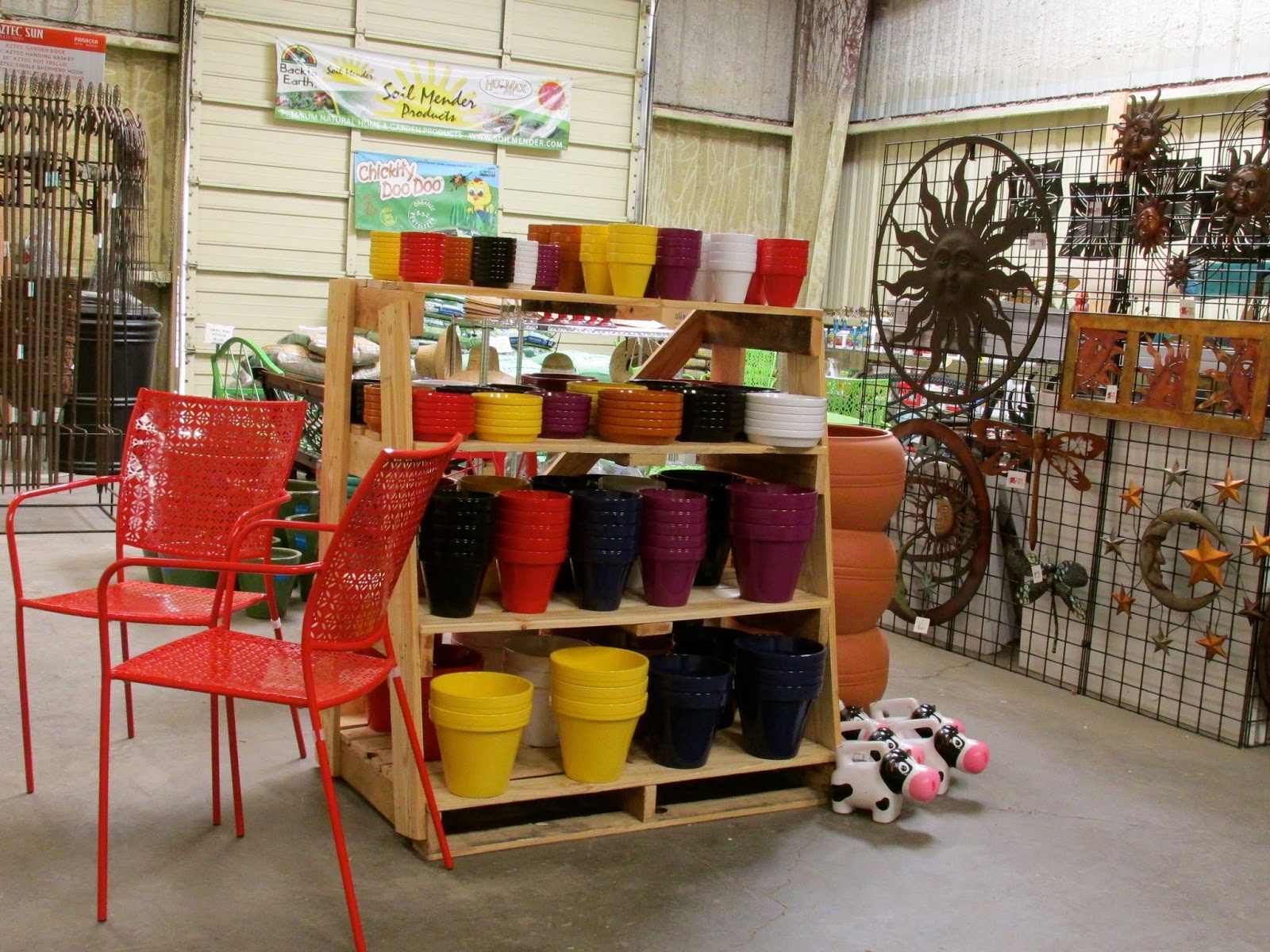
June 2014 & Garden Furniture Sale!


ALL OF OUR GARDEN FURNITURE 
including benches, tables and chairs 
are on sale through June or while supplies last
FOR 20% OFF!


THINGS TO DO:
Plant something. A tomato, a shrub, a petunia, a shade tree...anything can be planted now. We are starting to hear the old "Isn't it too late to plant?". Seriously? First it was "too early" and now it is "too late". I would really like to know when that 2 hour window of the perfect time to plant is open! What we always tell customers is if the plant (tree, shrub, perennial, whatever) is here and acclimated (outside, not coming out of a climate controlled greenhouse) to our area it is better off in the ground than it is sitting in the pot. That rule applies year round. Granted you have to water more often in June than you do in January but it is still ok to plant. I must say in the almost 20 years we have been in Silver City we have planted something in every month of the year with great success. When Steve was landscaping in Tucson they planted year round including when temps were 100+. So follow our "Planting and Care Guide" and keep it simple. Dig that hole twice as wide and 1 1/2 times as deep as the container the plant is in. Mix in 1/3 Back to Earth Compost Blend to 2/3 of your native soil (we know it is rarely good and sometimes terrible) and water in using Superthrive or B1. With all of this warm weather things will be growing and yes you will want to check them often for water needs. We can't tell you how often to water due to differences in soil drainage, planting mix preparation, weather, plant root maturity, etc. Stick your finger in or dig down about 2 inches just outside the rootball and when dry, water enough to wet all the way to the bottom of the root area and slightly beyond to encourage new roots.

Prune spring flowering shrubs. Forsythia, Lilac (Syringa), Spiraea , Pyracantha, Red Twigged Dogwood (Cornus) and other spring flowering shrubs will benefit from pruning now. First remove anything diseased, damaged or dead. Also prune out any crossing or rubbing branches. Forsythia, Lilacs and Red Twigged Dogwood all bloom on new wood. They should be encouraged to sprout new growth from their base by pruning 1/3 of the oldest, woodiest growth all the way to the ground. 'Snowmound' and other spring flowering Spiraea should have the branches that flowered removed and the new growth will then bloom next year. Most other shrubs can be pruned to a desired shape. If you have specific questions about how or when to prune one of your landscape plants, leave a comment here, email us or stop by the nursery and we will be happy to answer any questions you might have.

Deadhead. I talk and write about deadheading often because I know it keeps your annuals, perennials and flowering shrubs blooming abundantly. You will also prevent invasive plants from self-sowing as well as adding a neat and tidy appearance to your garden. Flowers attract pollinating birds and insects. After pollination a flower will put energy into producing seed instead of flowers. If you interrupt this cycle by removing the pollinated flowers or those that are declining, the plant will continue to produce more flowers. When removing dead flowers from perennials trace the stem back to a new flower bud. If there are no new buds cut it back to the foliage or the ground. If spent flowers outnumber the new buds shear all of the stems down to the foliage and it will quickly rebloom. Annuals can be deadheaded by pinching off the flowers back to the next leaf. When cutting flowers to bring indoors these same rules apply.

Control Insects. Because of the mild winter insect populations are at an all time high. To refresh your memory on what to use to control what, here is a link to a post when we had the same problems because of a really wet winter. Go figure. Controlling Insects

PLANT OF THE MONTH:
Artemisia 'Powis Castle'. This versatile member of the wormwood genus is a valuable addition to any landscape. It grows quickly to a 2-3 foot high by 3-5 foot wide mound with finely divided silver, feathery leaves. The color contrasts well with reds and oranges and blends with softer lavenders, blues and pinks. Plant it in the middle of a perennial bed, giving it lots of room, as a foundation plant or on a bank or hillside to prevent erosion. This perennial is very drought tolerant, cold hardy to 10 below zero and absolutely nothing will eat the citrusy-lavender smelling foliage. To keep it bushy you can cut it back in spring to around 6 inches being sure to leave plenty of leaf buds.

http://genialesideas.com/wp-content/uploads/2013/03/artemisia_powis_castle.jpg
Artemisia 'Powis Castle' and Salvia greggii


Thursday, May 1, 2014

May 2014

First and foremost you need to know that our fruit, shade and flowering trees have arrived along with our beautiful Weeks roses.
As always all of our roses are 10% OFF through Mother's Day!!!


THINGS TO DO:
Choose a tree. A tree is a big investment. Not just financial but in time spent planting, watering, fertilizing & pruning. That is why you need to put some serious thought into choosing the right tree for your situation. A well placed tree can provide shade, break the wind, block an unwanted view, attract birds, be something nice to look at or all of the above. Most important is the size of the tree. Always choose a variety that will not outgrow the space you are planting it in. Keep in mind that the absorbing roots of a tree are usually within the top 3 feet of soil and extend to the dripline. The dripline is the imaginary line where rain would fall from the outermost branches. So plant any tree where the mature size and the roots won't ever encroach on a building, patio, wall or driveway.The next thing to think about is what function you would like your tree to serve. Shade can be provided by numerous selections and deciduous trees that are meant to shade the house are best placed on the south or west side. To shade a patio, smaller scale trees may be useful as well as fruit trees. Since fruit production in our area is so sporadic, we always tell customers to use their fruit trees as shade first and fruit second.The best choice for a windbreak is an evergreen tree planted on the west or southwest side since that is where the prevailing winds come from. Choose evergreens because our spring winds usually start before the deciduous trees have leafed out and our winter winds can be brutal. Blocking a view would be best served with an evergreen as well because you probably don't want to look at whatever it is in the winter either. Many trees attract Hummingbirds with their flowers and Songbirds with their fruit. And a well placed tree can provide you with some spring or summer blooms and beautiful fall color.

Come in to the nursery and we can help you decide which tree is the best choice for whatever your needs may be.


Plant containers. One of my favorite spring chores is planting my containers at home. The rule of thumb when planting your pots is that they should contain a thriller, some filler and a spiller. I think primary colors (blue, red & yellow) always look good together but any combination of colors and textures that suit your individual taste will do. You should start by filling your pots with a great potting soil like Uni-Gro. This has been a customer favorite for 19 years and we personally use it for our pots and everything we grow for the nursery. Plant your thriller in the center of the container. A thriller could be anything tall like a decorative grass, Spike, any tall Salvia, Marogold or Zinnia or even a vegetable. Next choose a filler or two. The filler is something of medium height that will be shorter than your thriller but taller than your spiller. Fillers include Nasturtiums, Gerber Daisies, Gazanias, Petunias, Annual Vinca, Impatiens, Marigolds and many others. I think they look best in mass to get the full effect of the color. So plant them around your thriller in groups of three or more. The final step is the spiller and you can use one or two of these as well. Sweet Potato Vine, Wave Petunias, Million Bells, Portulaca, Asparagus Fern, Bacopa and Mandevilla all work well. Plant these towards the front or if the pot will be viewed from all sides, around the edge. Water your pots thoroughly with a root stimulator like SUPERTHRIVE (Yes we have it back!) and fertilize regularly with Fox Farm Tiger Bloom, Fruit & Flower or Yum Yum Mix. I know the question will be "What can I plant that the deer won't eat?" and my perfect combination for that is Spike (thriller), Vinca (filler) and Nierembergia or Asparagus Fern (spiller). Have fun with this and remember that we get weekly deliveries of annuals and perennials so you will have a lot to choose from whether your pots are in full sun, part sun or full shade.


PLANT OF THE MONTH:
Pinus nigra. The Austrian Black Pine is a fast growing, long needled, dark green pine that will reach a mature height of 30 feet tall by 15 feet wide. It forms a dense pyramid and unlike other pines it does not shed its lower branches so it stays full to the ground. This conifer makes a great windbreak and can be mixed with Blue Spruce, Eldarica Pines and other evergreens or used as a specimen. It is very cold hardy (think Austria) and a moderate water user.


Wednesday, April 2, 2014

Evergreens and Very Cool Stuff

Are you feeling inundated with blog posts? Just had to let you know we got in some beautiful evergreens including Spruce, Pine and Fir.


Also all of our 'Very Cool Stuff' is on sale for 50% off! The 'Very Cool Stuff' is actually a brand name not a personal appraisal.


Monday, March 31, 2014

APRIL 2014

THINGS TO DO: 
Xeriscape. Whether you are converting an existing landscape or starting from scratch, xeriscaping is the way to go. Please do not mistake 'xeri' for zero. XERIscapes are lush and beautiful incorporating a wide variety of water efficient plants to create an oasis-like feeling. ZEROscapes use a few yuccas and cactus in a sea of heat retaining rock.

There are several steps in creating a successful xeriscape. The first is planning and design. During this step you will analyze your site and your outdoor living requirements. Draw a site plan that includes: existing features such as windows, trees, patios and driveways; views that you want to screen or protect; full sun, part shade and full shade areas; utility lines; the contours of the land that may allow you to take advantage of runoff. Next decide what functions you would like your site to serve. The possibilities are areas viewed by the public (front yard), leisure areas (patios, the back yard, play areas for adults, children or pets, wildlife habitats), service areas (sheds, garbage receptacles), flower and vegetables garden areas and transitional areas that blend other use areas together. 

The next step is the plant step. Group plants according to their water needs. You may want to start with a mini-oasis near your home and decrease water use as you get further away. Decide the shape, size, water use and function of the plants you want and come to the nursery with that list to browse. We carry many drought tolerant native and non-native plants and provide you with a detailed planting guide to carry you through this step. Keep in mind that all native plants are not drought tolerant. Some exist naturally as understory plants or in riparian areas and tend to be moderate to even high water users.
Step three is improving the soil. If you plan to include beds or turf you will need to add Back to Earth Compost to the entire bed or turf area. For individual plants just improve the planting hole. The addition of this organic matter will provide nutrients and enable your soil to better absorb water.

Step four is to create appropriate turf areas. Decide how much grass, if any, will provide a functional benefit. If you need to plant a small lawn choose waterwise Buffalo and/or Blue Gramma. Existing turf areas can be replaced by colorful ground covers or mulch.

The fifth step is efficient irrigation. Install the appropriate irrigation system for the most effective watering. Turf areas are best watered by sprinklers, beds with bubblers and trees, shrubs and ground covers by drip emitters. If you must water by hand invest in a galvanized oscillator, water wand and a metal bubbler to cover all of your watering needs.

Step six is the one I write about all of the time. MULCH, MULCH, MULCH. Mulches cover the soil and reduce evaporation, maintain an even temperature and minimize weeds. Mulches include bark, compost and rock.

The seventh and final step is proper maintenance. Successful xeriscapes are "low" maintenance not "no" maintenance. Watering, fertilizing, pruning and controlling pests and weeds will ensure that your xeriscape develops into a healthy landscape. By following these steps and planning for the end result you want to achieve you will save time and money. Start today.

PLANT OF THE MONTH:
Acer ginnala. The Amur Maple is a deciduous shrub that grows at a moderate rate to a  height of 15 feet and can be pruned into a small tree. This Manchurian native blooms with small clusters of fragrant yellow flowers in early spring followed by red, winged seedpods. The toothed leaves are three lobed and 2-3" long. Being a true Maple the red fall color is spectacular. It is very cold hardy to at least 30 degrees below zero and a moderate water user. Plant this shrub outside a window where you can enjoy the fragrant flowers and fall color or, in tree form, off a patio for light shade.
 http://farm2.staticflickr.com/1196/1412713797_2014c84e2d_z.jpg

Monday, March 24, 2014

WE’RE OPEN!!!! TUESDAY through SATURDAY 9-5

WHAT’S NEW AT THE NURSERY?

SOILS: We have sold Uni-Gro Potting Soil here in Grant County for 19 years. It drains well to encourage root production but also holds a fair amount of moisture. We think it is the perfect potting soil for everything from seed starting to flower pots and Earthboxes. We also carry 3 Fox Farm soils. Ocean Forest Potting Soil, Coco Loco Potting Mix and Light Warrior Seed Starter. We have all of our regular Soil Mender products including Back to Earth Compost Blend, Top Soil and Composted Manure. Because we were able to buy some of our soils at a lower price this year, we are going to pass those savings along to customers and offer our Fox Farm and Uni-Gro Potting Soils at a reduced price.

FERTILIZERS: Our fertilizers are all organic or organic based. They work by creating healthy soil and therefore don’t need to be used as often as chemicals like Miracle Gro. We have Fox Farm’s Grow Big, Big Bloom and Tiger Bloom liquids and their granular Tomato & Vegetable, All Purpose, Fruit & Flower and Rose Food. Yum Yum Mix is back again as well as Gro-Power for lawns and vegetables and Chickity Doo Doo. We also carry Fish Emulsion, Seaweed Extract, Bone & Blood Meals, Rock Phosphate & Bat Guano.

POTTERY: Malaysian pottery is the most winter tolerant and we just received a load of new patterns and colors. Some have attached saucers. Also available are Chinese, Italian Clay, Vietnamese and Plastic. It is always a good idea to seal your terra cotta pots with Pottery Sealer and we have it! Something new that many customers request are Macrame & Fabric Plant Hangers. Some in nice bright colors as well as earth tones. Ceramic Birdbaths have also made a comeback. For your convenience we stock Plant Caddies in several different sizes. These items make heavy plants mobile so you can move them seasonally or to clean.


RAIN BARRELS: The Algreen Agua Rain Water Collection and Storage System combines the timeless aesthetic elegance of ceramics with the durability of modern plastics. This 50-gallon rainsaver is constructed from tough, roto molded plastic able to withstand extreme temperatures and will not chip, fade, or crack over time. The rain barrel comes with a 4-foot garden hose with shutoff nozzle and corrosion-proof screen guard. The hose hangs neatly on the attached hook. The rain barrel doubles as a planter and measures 23 x 33 inches.

FURNITURE: Some classic, some modern, we have Bistro Sets and Garden Benches.

WEED BARRIER & SHADE CLOTH: We are carrying 3 different Coolaroo Shade Cloths this year: 70% Sandstone, 50% Green or Black. The Weed Barrier is Dewitt Professional Grade. Both of these products are 6 feet wide and sold by the linear foot.

TRELLISES & SHEPHERD HOOKS: Redwood and Decorative Metal.


EARTHBOXES: Yes we are finally selling this popular Ultimate Gardening System! The original EarthBox® is a great value! You name it, you can grow it! Poor soil conditions and small backyards are no match for this patented container gardening system, developed by commercial farmers. Proven in the lab and on the farm, you get “great results no matter what color your thumb is,” because this maintenance-free growing system controls soil conditions, eliminates guesswork, and more than doubles the yield of a conventional garden—with less fertilizer, less water, and virtually no effort. Just add plants, water, and sunlight for an easy garden that requires no digging, no weeding, and no guesswork! Grow tomatoes and other robust vegetables and aromatic herbs in any small space—a balcony, patio, or even rooftops! This revolutionary SIP (Sub-Irrigated Planter) compact size allows you to grow healthy, fresh—even organic!—food where it never grew before! Unlike other raised bed gardens and planters, the EarthBox® gardening system is self-watering, sustainable, easily moveable and portable, and can even be used to grow indoors. Now that’s one smart garden!

HOSES & ACCESSORIES:
Another customer request has been heavy duty hoses. We have Gilmour Hoses "the last hose you will ever buy" along with Shut-off Valves, Y’s, Couplers, Water Breakers and the water wands we have grown to love, Dramm One-Touch Wands.

STAKING SYSTEMS: Tomato Cages, Redwood, Bamboo and Steel Stakes as well as 4’ by 6’ Bamboo Fencing. This fencing can be used to grow beans, cucumbers or squash, stake sunflowers and fence your garden.

SETS & ROOTS & CANES, "OH MY": Again this year we are offering Onion Sets, Asparagus, Rhubarb and Horseradish Roots as well as Raspberry, Blackberry and Grape Canes. Healthy plants, ready to go into the ground or a pot.


AND OF COURSE A FRESH LOAD OF FLOWERS & VEGETABLES: 


Again this year we will be giving away a $25 gift certificate to one of our luck blog subscribers. The winner will be notified by email on May 31st, 2014.

Sunday, March 2, 2014

March 2014

I can't believe it is March 2nd and so many plants have been fooled into blooming. This weather is crazy and there are still no freezing temps in the 10 day forecast. But like I said last month we have a long way to go before we can safely say it won't frost again. I am afraid some things will be so far along they may even be killed by the freeze to come.
We have had a lot of questions about watering and quite honestly if you are just starting to think about it now it may be too late. As I have said time and time again "Plants do 80 % of their root growth in late summer, fall and WINTER so it is especially important to keep them hydrated during this time". Here is a link to a comprehensive post on watering that everyone should read and reread as often as questions arise Water, water, water.
Bradford Pear (Pyrus calleryana 'Bradford')

March 1st!!!!!!

Flowering Crabapple (Malus 'Prairiefire'), starting to think about it.
Creeping Phlox (Phlox subulata 'Emerald Blue'), right on schedule.


THINGS TO DO:
Divide perennials. Now that a lot of your herbaceous perennials, those that die all the way to the ground in the winter, have started to grow you will want to divide those that need it. If the clumps have begun to die out in the center, their blooms are less abundant and smaller than usual or just seem overcrowded, they will benefit from division. Black-Eyed Susan (Rudbeckia), Daylillies (Hemerocallis), Coneflowers (Echinacea), any members of the mint family, that square-stemmed sometimes invasive Lamiaceae group that includes Mentha, Salvia, Monarda and many herbs can all be divided now. Division is the act of propagating a plant by dividing it into several individual plants, complete with roots and buds of their own. To get started have the area you plan to plant your new divisions into or the containers you will pot them in ready so you don't leave the roots exposed too long. Mix compost into your soil or use potting soil in pots. Dig up the root system using a trowel, spade or in the case of large clumps a garden fork. Brush off loose soil and remove any dead leaves and stems. Wash the soil from the crown so you can easily see the buds. Divide the clump into sections that contain several buds or shoots and healthy roots discarding any old, woody growth. Replant and water thoroughly to settle the soil around the roots. The rain we got yesterday will make this job a little easier so get out there soon and get this chore done. It may take a year for your newly planted perennials to start blooming well again but it will be worth the effort.

Prune roses.  After the first few leaf buds begin to break on your roses it is time to prune them. Here is a link to our Rose Guide Roses.

Plant cool season vegetables. When we open on the 25th we will have lots of cool season veggies for your planting pleasure. Check out last month's 'Silver City's Suggested Planting Times' for when to plant what or pick up a copy at the nursery.

PLANT OF THE MONTH:
Pyrus calleryana. I couldn't resist making this tree my plant of the month. The Flowering Pears around town are just gorgeous right now. Although they are not the smartest plant, flowering in February, they sure are a satisfying shade tree. Explosive spring flowers, shiny, dark green leaves and beautiful, red, orange and purple fall color...what's not to like? They even sometimes produce small, inedible fruit that birds enjoy. The 'Bradford' variety will grow at a moderate rate to 35 feet tall and 25 feet wide. It has a nicely rounded crown with strong horizontal limbs. Plant it where it has plenty of room to reach its full potential and give it a moderate amount of water. It is cold hardy to 20 degrees below zero.


Sunday, February 2, 2014

Almost that time again.

We are starting to think spring! The weather is so warm and dry, dry, dry, the fruit trees are budding, I saw a Robin the other day and the wind is blowing but the calendar reads February 2nd. Don't be fooled and remember that our average last frost date is May 1st which means the last frost usually falls somewhere between the 15th of April and the 15th of May. As of right now we are planning on opening on March 25th for our 2014 season. This will be Silver Heights Nursery's 19th year here in Silver City and we couldn't be happier about it. We will always provide you with quality plants at fair prices and give honest advice.
THINGS TO DO:
Plant cool season vegetables from seed. February is the month to plant, from seed, many vegetables that like cool soil to germinate. Beginning on the 15th of the month you can plant Spinach, Peas, Leeks, Onions and Carrots. Shallot and Onion Sets can also be planted then. Towards the end of the month start Beets, Swiss Chard, Leaf Lettuce, Radishes and Turnips. You will want to cover these seeds with a frost guard  fabric (remay) or floating row cover when you plant to protect the seedlings from extreme cold and birds. You can also start seeds indoors now for cool season veggies to be planted outside around March 15th. Please see January 2013 'Start seeds indoors'.

SILVER CITY’S SUGGESTED PLANTING TIMES
ASPARAGUS (P)                     MARCH1-APRIL30
BEANS, BUSH (S)                  MAY1-31 & JULY1-31
BEANS, POLE (S)                   MAY1-31
BEANS, LIMA (S)                  MAY1-JULY15
BEANS, PINTO (S)                MAY1-31
BEETS (S)                              MARCH1-APRIL15 & JULY15-AUGUST1
BROCCOLI (S) (P)                   MARCH15-APRIL1 & JULY1-15
BRUSSELS SPROUTS (S) (P) APRIL1-MAY15
CABBAGE (S) (P)                    MARCH15-31 & JULY1-15
CANTALOUPE (S) (P)             APRIL15-30
CARROTS (S)                         FEBRUARY15-APRIL 1 & JULY1-AUGUST1
CAULIFLOWER (S) (P)           MARCH15-31 & JULY1-AUGUST1
CHARD, SWISS (S) (P)          MARCH1-APRIL15 & JULY1-AUGUST1
CORN, SWEET (S)                 APRIL20-JULY1
CUCUMBER (S) (P)                 APRIL15-MAY15
EGGPLANT (P)                       APRIL15- MAY15
GARLIC (Bulb)                       SEPTEMBER15-NOVEMBER15
LEEKS (S)                              FEBRUARY15-MARCH15
LETTUCE, HEAD (S) (P)         MARCH1-15
LETTUCE, LEAF-ROMAINE
-BUTTERHEAD (S) (P)           MARCH1-31 & JULY15-AUGUST15
OKRA (S)                               APRIL15-30
ONIONS (S) (Sets)               FEBRUARY15-MARCH15 & SEPTEMBER1-31
PEAS (S)                                FEBRAURY15-APRIL15
PEPPERS,BELL,CHILES (S) (P) APRIL15- MAY15
POTATOES, RED-RUSSET-
WHITE (SP)                           APRIL1- MAY15
POTATOES, SWEET (SP)       MAY15-31
PUMPKIN (S)                          MAY1-15
RADISH (S)                            MARCH1-APRIL30 & SEPTEMBER1-30
SPINACH (S) (P)                     FEBRUARY15-MARCH15 & AUGUST1-30
SQUASH, SUMMER (S) (P)     APRIL15-JULY1
SQUASH, WINTER (S) (P)     APRIL15-MAY15
TOMATOES (S) (P)                 APRIL15-MAY15
TURNIPS (S)                          MARCH1-APRIL15 & JULY1-AUGUST15
WATERMELON (S) (P)           APRIL20-MAY20

(S) =plant by seed; (P) = plant live transplants; (SP) =plant seed potatoes or use pieces of organic potatoes
Last frost date in the Grant County area is April 15-May 15 depending on the year and microclimate you are in.
Grant County Extension Service has more free information at 2610 N. Silver Street, Silver City (575) 388-1559.

Maintain a healthy lawn. If you haven't thought about your lawn needs for a while now would be a good time to do so. A good raking will help remove thatch build-up. Use a heavy landscape rake or a rake made specifically for dethatching and rake in all four directions. This will help get oxygen to the roots and provide space for an application of gypsum and fertilizer later in the spring. For now, after you have raked, give it a good long drink of water and the very next day you will see a difference. 

Another word on watering. WATER!

PLANT OF THE MONTH: Gazania krebsiana 'Tanager'.  We have had several customers tell us that the Gazanias we sell as warm season annuals have overwintered for them. And in a mild winter I am sure that is true but most are just zone 8 plants meaning they are only cold hardy to 30 degrees. A relatively new introduction (2003), 'Tanager' is hardy to zone 6 or 10 degrees BELOW zero and in protected areas of zone 5. This evergreen perennial has dark glossy green foliage with silvery undersides that develops a purplish tinge in winter and forms a small mound 4" tall by up to a foot wide. It blooms throughout the spring, summer and fall and ours were actually flowering on a 60 degree day in January. The daisy-like flowers are fluorescent orange and look as though they were individually painted. It is a very drought tolerant plant that does best in full sun and would look good in the front of a border, along a walkway or in a pot where the detail of the flowers can be fully appreciated. It is a Plant Select variety and we have found all of their recommendations to be very successful here.