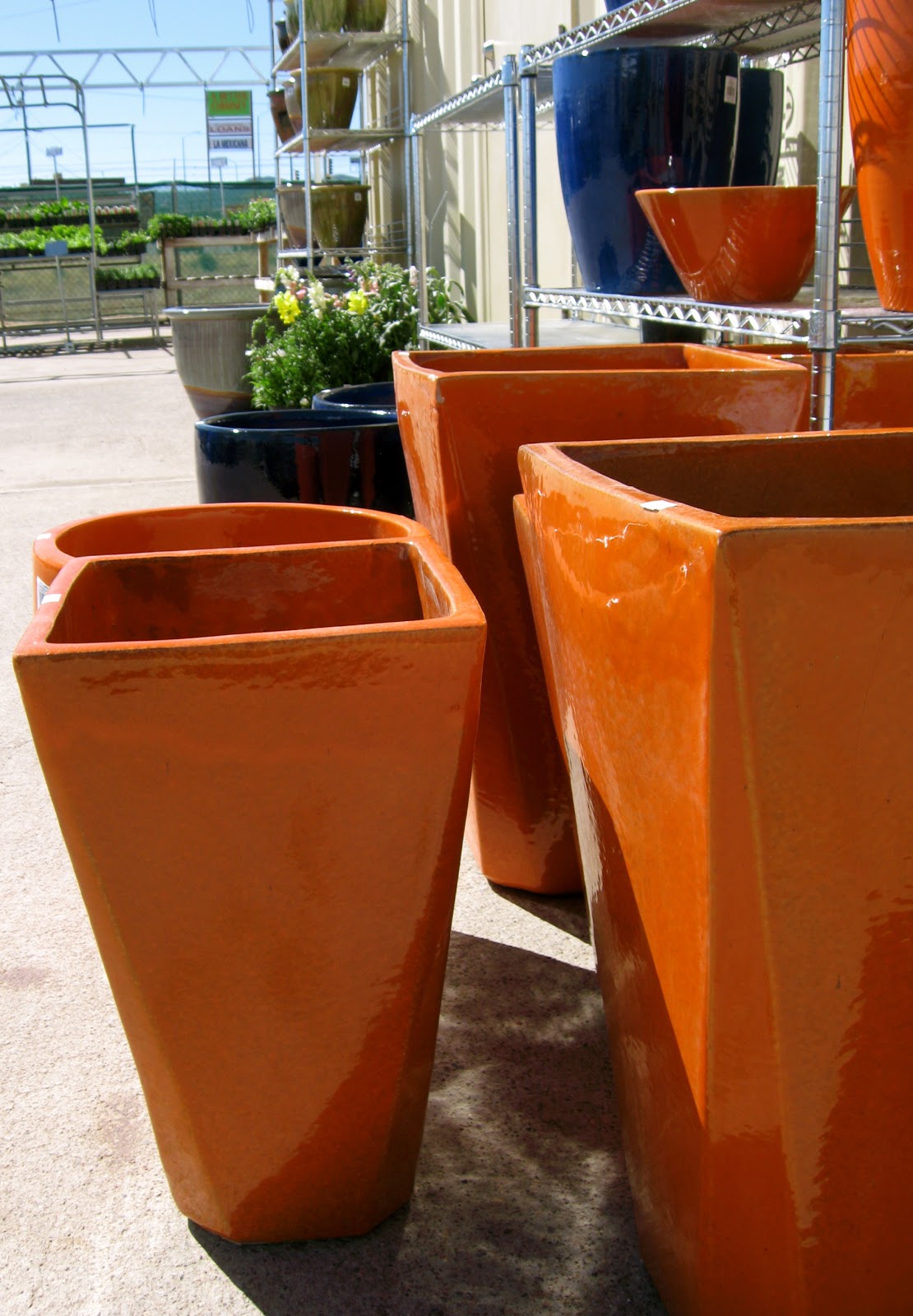
We open today, March 26th at 9:00 and will be open Tuesdays-Saturdays 9:00-5:00 through September. Look forward to seeing you.
Monday, March 25, 2013
Wednesday, March 6, 2013
Almost there!
We have been very busy getting the nursery ready to open on March 26th. A truckload of soil and hardgoods has been unloaded. Hardgoods being anything that doesn't require water. Next we made the long drive to our perennial plug grower and picked up some beautiful new plants plus some old favorites. These have been potted into #1 containers and they will be ready for sale, depending on the weather, by late April or early May. Here are some of our new products.
Classic Brands 'More Birds' Songbird Feeders and Hummingbird Feeders. We went with Classic Brands feeders because the company actually researched 1000 bird lovers to see what they wanted in a feeder. The information they gathered led them to implement the following features on the Songbird Feeders:
We are carrying the 'Harmony' which has a 2 pound capacity and 6 feeding ports and the 'Abundance' that has a 6 pound capacity. Here is a link to some feeding tips that 'More Birds' provides. Feeding Tips
The attributes they applied to the Hummingbird Feeders are:
Paradise Bay Hats. These are the classic straw hats that last forever and provide good shade from our intense sun. We sold them at our old nursery and have had many requests to bring them back. They sell for under $10.00.
Ocean Forest Potting Soil and Fox Farm Fertilizers. The nursery will continue to sell these high quality soils and fertilizers and have managed to keep the prices either the same or a little less than last year!
Bird Netting, Frost Guard, Landscape Grade Weed Barrier and Shade Cloth by the foot, Pond Pumps, Benches, Organic Fertilizers and Insecticides, Redwood Trellises, Plastic Pots, Super Saucers, Rain Gauges, Birdbaths, Deer Stopper, Tree Stakes, even more Beautiful Glazed Pottery and new Yard Art.
Again this year we will only be announcing sales and new arrivals on our blog. If you subscribe you will be among the first to know. Subscribe now by entering your email address in the box below "Subscribe via email" and hit the "Subscribe" button. You will then receive an email from Feedburner which you have to respond to to activate your subscription. It is that easy and you will then get any new posts we make. You will not receive any other emails or spam by subscribing to our blog. We will be giving away a $25.00 gift certificate to a lucky subscriber on May 1st. This will be a random drawing and the winner will be notified by email. You don't need to do anything except subscribe or already be subscribed to enter.
Thanks again for your continued support and we hope to see you soon!
Classic Brands 'More Birds' Songbird Feeders and Hummingbird Feeders. We went with Classic Brands feeders because the company actually researched 1000 bird lovers to see what they wanted in a feeder. The information they gathered led them to implement the following features on the Songbird Feeders:
- Easy Fill. All of the feeders have wide fill openings.The tube feeder has a funnel top.
- Easy Clean. Each feeder has removable tops, sides and bottoms and are dishwasher safe.
- Stay Full Port. All of the ports stay full even when the seed gets low.
- Attract More Birds. Most feeders make the birds put their heads into the feeder and they lose their peripheral vision which makes them concerned about predators. These feeders bring the food out to the birds and have large round perches where the birds can sit in any position and feel safe and comfortable.
- Choose Your Birds. With a changeable shutter you can serve any kind of seed or thistle. The perches also adjust for larger or smaller birds.
We are carrying the 'Harmony' which has a 2 pound capacity and 6 feeding ports and the 'Abundance' that has a 6 pound capacity. Here is a link to some feeding tips that 'More Birds' provides. Feeding Tips
The attributes they applied to the Hummingbird Feeders are:
- Easy Fill. Wide mouths and flat bottoms make these very easy to fill.
- Easy Clean. Each feeder base comes apart and has a large opening.
- Lots of Features. The feeders have more feeding ports, built in perches and bee guards.
Paradise Bay Hats. These are the classic straw hats that last forever and provide good shade from our intense sun. We sold them at our old nursery and have had many requests to bring them back. They sell for under $10.00.
Ocean Forest Potting Soil and Fox Farm Fertilizers. The nursery will continue to sell these high quality soils and fertilizers and have managed to keep the prices either the same or a little less than last year!
Bird Netting, Frost Guard, Landscape Grade Weed Barrier and Shade Cloth by the foot, Pond Pumps, Benches, Organic Fertilizers and Insecticides, Redwood Trellises, Plastic Pots, Super Saucers, Rain Gauges, Birdbaths, Deer Stopper, Tree Stakes, even more Beautiful Glazed Pottery and new Yard Art.
Again this year we will only be announcing sales and new arrivals on our blog. If you subscribe you will be among the first to know. Subscribe now by entering your email address in the box below "Subscribe via email" and hit the "Subscribe" button. You will then receive an email from Feedburner which you have to respond to to activate your subscription. It is that easy and you will then get any new posts we make. You will not receive any other emails or spam by subscribing to our blog. We will be giving away a $25.00 gift certificate to a lucky subscriber on May 1st. This will be a random drawing and the winner will be notified by email. You don't need to do anything except subscribe or already be subscribed to enter.
Thanks again for your continued support and we hope to see you soon!
Wednesday, February 6, 2013
February 2013
THINGS TO DO:
Break out the broom. You probably don't think of a broom as a garden tool but I quite often use mine as one. One of my favorite uses is cleaning the winter damage from my Creeping Phlox (Phlox subulata). After a good sweeping the Phlox looks green and bright and ready to display its early spring flowers. Another sweepable (is that a word?) plant is Creeping Thyme (Thymus minus or serpyllum). It tends to look brown and dead at this time of year but cheers right up once I've broomed it. Other plants I sweep are Pincushion Flower (Scabiosa), Iceplant (Delosperma) and Creeping Rosemary (Rosmarinus). A broom is sometimes useful in cleaning fallen leaves from sturdy shrubs such as Sage (Salvias) and Lavender (Lavandula). Enjoy this warm spell and get those plants cleaned up.
Divide perennials. Propagating a plant by dividing it into several individual plants, complete with roots and buds of their own, is called division. Most herbaceous perennials, those that die to the ground in the winter, will benefit from being divided every few years. Bee Balm (Monarda), Daylillies (Hemerocallis), some Sage (Salvia), Black-Eyed Susan (Rudbeckia) and Coneflowers (Echinacea) are just a few that fall into this category. If your perennials have become overgrown, died out in the center or just don’t bloom as well as they used to, rejuvenate them by dividing now. Have the area you plan to transplant them to or the containers you will pot them in ready so you don’t leave their roots exposed for too long. Add 1/3 Back to Earth Compost to 2/3 of your native soil and a handful of Bone Meal to encourage root growth when planting in the ground. Use Uni-Gro Organic Potting Soil for containers. Start by digging up the root system using a trowel, spade or in the case of large clumps a garden fork. Shake off the loose soil and remove dead leaves and stems. Wash the soil from the crown so you can see the buds clearly. Divide the clump into sections that contain several buds or shoots and healthy roots discarding any old, woody growth. Replant and water thoroughly with a root stimulator to settle the soil around the roots. If it as been dry you may want to water the plants you are dividing the night before you plan to dig them to make your job a little easier.
PLANT OF THE MONTH:
Potentilla fruticosa 'Goldfinger'. 'Goldfinger' Cinquefoil, referring to its five-leaved leaflets, is a small, mounding deciduous shrub that grows at a moderate rate to 3' by 3' and is well adapted to moist or dry soil. This member of the rose family (Rosaceae) flowers all summer with deep yellow 2 " blooms at the ends of its branches. It is deer resistant and low maintenance, only needing to be sheared to about a foot tall in late winter keeping it fuller and more floriferous. This shrub makes a good background plant in a low perennial bed with Coneflowers (Echinacea), Pincushion Flowers (Scabiosa), the ground cover Dwarf Plumbage (Ceritostigma) or other low growing red or blue flowers. It is also nice as a foundation plant or in a cottage garden. Potentilla 'Goldfinger' will be happy in full sun or part shade, is cold hardy to zone 2 (-50 to -40) and drought tolerant once established.
Break out the broom. You probably don't think of a broom as a garden tool but I quite often use mine as one. One of my favorite uses is cleaning the winter damage from my Creeping Phlox (Phlox subulata). After a good sweeping the Phlox looks green and bright and ready to display its early spring flowers. Another sweepable (is that a word?) plant is Creeping Thyme (Thymus minus or serpyllum). It tends to look brown and dead at this time of year but cheers right up once I've broomed it. Other plants I sweep are Pincushion Flower (Scabiosa), Iceplant (Delosperma) and Creeping Rosemary (Rosmarinus). A broom is sometimes useful in cleaning fallen leaves from sturdy shrubs such as Sage (Salvias) and Lavender (Lavandula). Enjoy this warm spell and get those plants cleaned up.
| Creeping Phlox (Phlox subulata) before |
| and after sweeping. |
Divide perennials. Propagating a plant by dividing it into several individual plants, complete with roots and buds of their own, is called division. Most herbaceous perennials, those that die to the ground in the winter, will benefit from being divided every few years. Bee Balm (Monarda), Daylillies (Hemerocallis), some Sage (Salvia), Black-Eyed Susan (Rudbeckia) and Coneflowers (Echinacea) are just a few that fall into this category. If your perennials have become overgrown, died out in the center or just don’t bloom as well as they used to, rejuvenate them by dividing now. Have the area you plan to transplant them to or the containers you will pot them in ready so you don’t leave their roots exposed for too long. Add 1/3 Back to Earth Compost to 2/3 of your native soil and a handful of Bone Meal to encourage root growth when planting in the ground. Use Uni-Gro Organic Potting Soil for containers. Start by digging up the root system using a trowel, spade or in the case of large clumps a garden fork. Shake off the loose soil and remove dead leaves and stems. Wash the soil from the crown so you can see the buds clearly. Divide the clump into sections that contain several buds or shoots and healthy roots discarding any old, woody growth. Replant and water thoroughly with a root stimulator to settle the soil around the roots. If it as been dry you may want to water the plants you are dividing the night before you plan to dig them to make your job a little easier.
PLANT OF THE MONTH:
Potentilla fruticosa 'Goldfinger'. 'Goldfinger' Cinquefoil, referring to its five-leaved leaflets, is a small, mounding deciduous shrub that grows at a moderate rate to 3' by 3' and is well adapted to moist or dry soil. This member of the rose family (Rosaceae) flowers all summer with deep yellow 2 " blooms at the ends of its branches. It is deer resistant and low maintenance, only needing to be sheared to about a foot tall in late winter keeping it fuller and more floriferous. This shrub makes a good background plant in a low perennial bed with Coneflowers (Echinacea), Pincushion Flowers (Scabiosa), the ground cover Dwarf Plumbage (Ceritostigma) or other low growing red or blue flowers. It is also nice as a foundation plant or in a cottage garden. Potentilla 'Goldfinger' will be happy in full sun or part shade, is cold hardy to zone 2 (-50 to -40) and drought tolerant once established.
Potentilla fruticosa 'Goldfinger'
Sunday, January 13, 2013
January 2013
THINGS TO DO:
Prune deciduous trees and summer flowering shrubs & vines. Here is the link to Pruning. I think we covered it pretty well in this post but if you have a specific question leave a comment or email us at silverheightsnursery@gmail.com.
Apply dormant spray. If you have had problems in the past with insects and diseases on your fruit and shade trees, shrubs or perennials now is the time to manage them with dormant spray. An application of horticultural oil will smother overwintering aphids of all kinds, scale, mealy bugs, whiteflies and spider mites as well as their eggs. It is also effective against the larvae of coddling moths which is the common apple worm. Lime sulphur spray will control powdery mildew, peach leaf curl, apple scab and twig borers. A copper fungicide can be used to keep leaf spot, peach leaf curl and shot hole fungus in check. Be sure to spray the entire plant including branch crotches where insects like to lay their eggs. Clean up any debris out to the drip line and spray the soil as well. Always follow label directions carefully on all of these products and choose a warm, calm day for best results.
Start seeds indoors. If you are planning your spring garden there are many cool season vegetables that can be planted from transplants as early as March 15th so now is a good time to start them indoors from seed. Remember, the quality of the seed you use is important. We carry Lake Valley and Pagano Seed. These seeds are all untreated and contain no genetically modified or engineered organisms. We are not open now for you to purchase them from us but a lot of you stocked up before we closed. If you do need seed before we open I would recommend Johnny's Seeds or Territorial Seed online. Cabbage, Broccoli, Cauliflower, Brussels Sprouts, Lettuce and Spinach can all be started now and will be ready to transplant outdoors in 8-12 weeks. Fill a seed tray with good potting soil like Uni-gro that drains well. Firm the soil gently and plant the seed according to package directions. Most cool season vegetables germinate well at a temperature between 50 and 70 degrees so the top of a refrigerator or a warm window sill is fine but don't forget that window sills can get awfully cold at night. After planting water the soil well to ensure that all air pockets have been filled. Keep the soil moist, not wet, using a watering can with a fine rosette or simply misting with a spray bottle. Once the seeds have germinated they will need lots of light. A sunny window, heated greenhouse or fluorescent grow lights work best. When the seedlings develop their second set of leaves it is time to transplant them. Using your fingers or a spoon dig up individual seedlings keeping the rootball intact. Plant them in 3-4'' pots filled with potting soil. Water thoroughly to settle the soil and fertilize regularly with Fox Farm Liquid Grow Big or Big Bloom or granular Fox Farm Tomato and Vegetable. Keep them in bright light and water when needed. You may want to transplant these vegetables again into larger containers as they outgrow their pots. One week before you plan to plant your vegetables outside you will need to "harden them off" or get them used to direct sunlight and changing temperatures. Set them outside for a few hours every day gradually increasing their exposure to sun and cold. Once they are ready for the real world plant them into your garden. You will want to cover them with floating row cover until freezing temps have passed. Does this sound like too much trouble? We'll have plants ready to go when we open for the season.
PLANT OF THE MONTH:
Humulus 'Summer Shandy' Hops. A Shandy is beer mixed with a carbonated beverage such as ginger ale or lemon-lime soda and if you plant one of these hops vines you could be making your own shandy this summer. Yes, hops are used for brewing beer, but this deciduous vine was bred for its ornamental appeal as well. The new leaves emerge yellow-green and mature to a bright golden-yellow. 'Summer Shandy' has a refined habit and less aggressive growth than other varieties. Growing at a moderate rate to 5-10' tall it is well-suited to home gardens, on a fence, trellis or spilling out of a large pot. It is cold hardy to 20 degrees below zero and would appreciate some afternoon shade.
Prune deciduous trees and summer flowering shrubs & vines. Here is the link to Pruning. I think we covered it pretty well in this post but if you have a specific question leave a comment or email us at silverheightsnursery@gmail.com.
Apply dormant spray. If you have had problems in the past with insects and diseases on your fruit and shade trees, shrubs or perennials now is the time to manage them with dormant spray. An application of horticultural oil will smother overwintering aphids of all kinds, scale, mealy bugs, whiteflies and spider mites as well as their eggs. It is also effective against the larvae of coddling moths which is the common apple worm. Lime sulphur spray will control powdery mildew, peach leaf curl, apple scab and twig borers. A copper fungicide can be used to keep leaf spot, peach leaf curl and shot hole fungus in check. Be sure to spray the entire plant including branch crotches where insects like to lay their eggs. Clean up any debris out to the drip line and spray the soil as well. Always follow label directions carefully on all of these products and choose a warm, calm day for best results.
Start seeds indoors. If you are planning your spring garden there are many cool season vegetables that can be planted from transplants as early as March 15th so now is a good time to start them indoors from seed. Remember, the quality of the seed you use is important. We carry Lake Valley and Pagano Seed. These seeds are all untreated and contain no genetically modified or engineered organisms. We are not open now for you to purchase them from us but a lot of you stocked up before we closed. If you do need seed before we open I would recommend Johnny's Seeds or Territorial Seed online. Cabbage, Broccoli, Cauliflower, Brussels Sprouts, Lettuce and Spinach can all be started now and will be ready to transplant outdoors in 8-12 weeks. Fill a seed tray with good potting soil like Uni-gro that drains well. Firm the soil gently and plant the seed according to package directions. Most cool season vegetables germinate well at a temperature between 50 and 70 degrees so the top of a refrigerator or a warm window sill is fine but don't forget that window sills can get awfully cold at night. After planting water the soil well to ensure that all air pockets have been filled. Keep the soil moist, not wet, using a watering can with a fine rosette or simply misting with a spray bottle. Once the seeds have germinated they will need lots of light. A sunny window, heated greenhouse or fluorescent grow lights work best. When the seedlings develop their second set of leaves it is time to transplant them. Using your fingers or a spoon dig up individual seedlings keeping the rootball intact. Plant them in 3-4'' pots filled with potting soil. Water thoroughly to settle the soil and fertilize regularly with Fox Farm Liquid Grow Big or Big Bloom or granular Fox Farm Tomato and Vegetable. Keep them in bright light and water when needed. You may want to transplant these vegetables again into larger containers as they outgrow their pots. One week before you plan to plant your vegetables outside you will need to "harden them off" or get them used to direct sunlight and changing temperatures. Set them outside for a few hours every day gradually increasing their exposure to sun and cold. Once they are ready for the real world plant them into your garden. You will want to cover them with floating row cover until freezing temps have passed. Does this sound like too much trouble? We'll have plants ready to go when we open for the season.
PLANT OF THE MONTH:
Humulus 'Summer Shandy' Hops. A Shandy is beer mixed with a carbonated beverage such as ginger ale or lemon-lime soda and if you plant one of these hops vines you could be making your own shandy this summer. Yes, hops are used for brewing beer, but this deciduous vine was bred for its ornamental appeal as well. The new leaves emerge yellow-green and mature to a bright golden-yellow. 'Summer Shandy' has a refined habit and less aggressive growth than other varieties. Growing at a moderate rate to 5-10' tall it is well-suited to home gardens, on a fence, trellis or spilling out of a large pot. It is cold hardy to 20 degrees below zero and would appreciate some afternoon shade.
| Humulus 'Summer Shandy' Hops |
Saturday, December 22, 2012
Happy Holidays!
This is Wolf Creek Pass, CO in February of 2011. We were hoping for something like that here this Christmas but no such luck. Yes, I am one of those! One positive note on the warmer winter is our great vegetable garden. Even with a few nights in the teens we are cutting lettuce and bok choy, pulling radishes and it won't be long before the broccoli and cabbage are ready. Amazing what a little floating row cover will do.
So from our family to yours, Happy Holidays and the best of everything in the New Year!
| Farmer Gus |
Sunday, November 18, 2012
Thanksgiving
- Looks like the warm weather is going to continue for a while. Don't forget to check your plants and water accordingly. Here is a link to a previous blog on everything you would ever want to know about watering. June 2011 Watering
- Saturday, November 24th is Small Business Saturday. There are so many great, locally owned businesses in Grant County. Please get out and support them.
- A friend sent me a link to this website and I thought I would share it with you. Just Label It!
- Steve and I want to wish everyone a very Happy Thanksgiving! Wherever you are and whoever you are with, enjoy the day.
Sunday, November 4, 2012
November 2012
In case you haven't noticed the nursery is closed for the season. We will reopen on either March 26th or April 2nd, 2013 depending on weather and delivery schedules. There will be lots of new and exciting products. I'll keep you posted.
THINGS TO DO:
Wrap trees for winter. Below are some photos of tree damage. Many of you may think this looks like borer damage but it is really inflicted by the Red-Naped Sapsucker. He is a winter resident in our yard and drills rows of small shallow holes in tree bark, feeding on the sap and the insects it attracts. We actually lost a small Golden Rain Tree because the birds girdled it. The best protection against this damage is to wrap trees with a tree guard. Tree guards come in a lot of different shapes and sizes just make sure that whatever you use allows your tree trunk to expand since the biggest increase in caliper occurs in winter. A tree wrap will also protect your trees from sunscald or southwest injury. This happens when a deciduous tree sheds it leaves in winter and exposes the trunk to direct sunlight. The sun heats up the bark (which is why to never use black guard or wrap that heats even more), the sap starts flowing and when it freezes at night it ruptures the cells. This usually occurs on the southwest side of the tree. Take the time to wrap your trees and they will be healthier because of it.
PLANT OF THE MONTH:
Parthenocissus quinquefolia 'Red Wall'. As most of you have gathered from previous posts (Seeing Red, Dorothy) I love fall and all of the colors it has to offer. This year we have added a new vine to our landscape that has proven itself as a fast grower with fire engine red fall color. We planted the 'Red Wall' on our new garden shed, one of last year's winter projects, in May from a 4 1/2" plug. It climbed vigorously the 8' to the roof and then began its run under the eave. This is a Proven Winner cultivar of a native that has large 5 lobed, dark green leaves and produces blue berries in the fall that birds enjoy. It is a salt tolerant, deciduous vine that will quickly reach 20 feet in full sun or shade. Perfect for covering a wall, fence or hillside. This plant is cold hardy to 40 degrees below zero and fairly drought tolerant once established. We grew these last spring and sold out quickly so we are growing more for next year. You will love this vine!
THINGS TO DO:
Wrap trees for winter. Below are some photos of tree damage. Many of you may think this looks like borer damage but it is really inflicted by the Red-Naped Sapsucker. He is a winter resident in our yard and drills rows of small shallow holes in tree bark, feeding on the sap and the insects it attracts. We actually lost a small Golden Rain Tree because the birds girdled it. The best protection against this damage is to wrap trees with a tree guard. Tree guards come in a lot of different shapes and sizes just make sure that whatever you use allows your tree trunk to expand since the biggest increase in caliper occurs in winter. A tree wrap will also protect your trees from sunscald or southwest injury. This happens when a deciduous tree sheds it leaves in winter and exposes the trunk to direct sunlight. The sun heats up the bark (which is why to never use black guard or wrap that heats even more), the sap starts flowing and when it freezes at night it ruptures the cells. This usually occurs on the southwest side of the tree. Take the time to wrap your trees and they will be healthier because of it.
| Sapsucker damage to apple tree |
| Sapsucker damage to apple tree |
| Bradford Pear with tree guard |
PLANT OF THE MONTH:
Parthenocissus quinquefolia 'Red Wall'. As most of you have gathered from previous posts (Seeing Red, Dorothy) I love fall and all of the colors it has to offer. This year we have added a new vine to our landscape that has proven itself as a fast grower with fire engine red fall color. We planted the 'Red Wall' on our new garden shed, one of last year's winter projects, in May from a 4 1/2" plug. It climbed vigorously the 8' to the roof and then began its run under the eave. This is a Proven Winner cultivar of a native that has large 5 lobed, dark green leaves and produces blue berries in the fall that birds enjoy. It is a salt tolerant, deciduous vine that will quickly reach 20 feet in full sun or shade. Perfect for covering a wall, fence or hillside. This plant is cold hardy to 40 degrees below zero and fairly drought tolerant once established. We grew these last spring and sold out quickly so we are growing more for next year. You will love this vine!
| 6 months growth! |
| Parthenocissus quinquefolia 'Red Wall' |
Subscribe to:
Posts (Atom)